
AI in fraud prevention is now central to how banks and fintechs protect customers, because payments move in seconds and fraudsters adapt just as quickly. This guide explains how machine learning spots suspicious payments, how banks and fintechs use it alongside name checks and shared intelligence, and how regulators in the UK, Singapore and the UAE are raising the bar.
The stakes are high. Instant payments are convenient for customers and for criminals alike, and once money has left an account and passed through a chain of mule accounts it is hard to recover. The firms that do best treat fraud prevention as a product feature, not a back-office cost.
We run FinNext, a one-day fintech summit for founders, investors and bankers. This article sets out the essentials of AI-driven fraud prevention in plain language, with links to the regulators and sources behind every figure.
In this article
What AI in fraud prevention actually means
Payment fraud falls into two broad groups. Unauthorised fraud is when a criminal makes a payment without the account holder’s permission, for example with stolen card details or a taken-over online banking login. Authorised push payment (APP) fraud is when the victim is tricked into sending the money themselves, for instance by someone posing as their bank, a supplier or a romantic partner.
Traditional payment fraud systems rely on fixed rules, such as blocking a card used in two countries within an hour. Rules are easy to explain but brittle: criminals learn them, and strict rules flag many genuine payments. Machine learning models instead learn from large volumes of past transactions which combinations of signals tend to precede fraud, and give each new payment a risk score in milliseconds.
In practice most banks run both, and that blend is what AI in fraud prevention usually looks like day to day. Rules handle known patterns and regulatory requirements, while models catch the subtler, fast-changing patterns that rules miss. The model’s score then decides whether a payment goes through, is paused for a check, or is blocked.
The scale of payment fraud
UK figures show why fraud has become a priority for AI in banking. According to UK Finance’s fraud report published in June 2026, criminals stole £1.28 billion through payment fraud in 2025, an increase of four per cent. Unauthorised fraud losses fell five per cent to £703.4 million across 3.81 million cases, while APP fraud losses rose 19 per cent to £576.4 million across 248,070 cases.
The same report says the industry prevented £1.68 billion of unauthorised fraud. That contrast is telling: payment fraud detection is getting better at stopping payments criminals make themselves, but scams that persuade customers to pay are harder to catch, because the customer is the one authorising the payment.
Where scams start also matters. UK Finance found that 66 per cent of APP fraud cases began online and 17 per cent through telecommunications, with telecoms-linked cases accounting for 28 per cent of losses. Much of the warning sign sits outside the bank, which is why data sharing with other sectors has become a priority.

How AI detects payment fraud
Fraud detection is already one of the main uses of AI in banking and finance. In the Bank of England and FCA survey of AI in UK financial services, published in November 2024, 75 per cent of firms said they were already using AI, and fraud detection was the third most common area, used by 33 per cent of respondents. Four techniques do most of the work in payment fraud detection.
Transaction risk scoring
Every payment is scored against the customer’s normal behaviour and the wider population. Signals include the amount, the time of day, the payee, whether the payee is new, the device and location, and how quickly the payment follows a login or a change of details. A payment that looks very different from a customer’s history scores higher.
Behavioural and device signals
Models can also read how a customer uses their app or browser: typing rhythm, how they move through screens, whether a remote-access tool is running, or whether they hesitate as if being coached on the phone. These signals help detect account takeover and some scams, where the right person is logged in but is acting under instruction.
Network analysis and mule detection
Payment fraud rarely ends with one account. Stolen money is moved through chains of mule accounts before it is cashed out. In its September 2026 review of money mule activity, the FCA found that cash-out typically happened between the second and fifth mule account, and urged firms to look beyond the first receiving account at linked accounts, payment characteristics and the wider transaction context. Network analysis, which maps the links between accounts, devices and payments, is built for that job.
Scoring payments on both sides
Sending banks see the victim; receiving banks see the mule. Some systems now share a risk score with both. Mastercard said in September 2024 that its Consumer Fraud Risk tool, which scores real-time payments for scam risk, had helped 11 UK banks stop scam payments since early 2023, and that offline tests of alerts for receiving banks showed an average 60 per cent improvement in a bank’s ability to identify high-risk mule accounts early. These are the company’s own figures.
How banks and fintechs stop payment fraud in practice
Models only help if their output leads to a sensible action. AI in fraud prevention is as much about what happens after the score as the score itself. The strongest fraud programmes combine scoring with a small set of well-designed interventions.
- Step-up checks. A medium-risk payment triggers extra authentication or a short questionnaire about why the customer is paying.
- Targeted warnings. Messages tailored to the likely scam type, such as an investment or impersonation scam, work better than generic pop-ups.
- Holds and call-backs. High-risk payments are paused so a trained colleague can speak to the customer before money leaves.
- Account restrictions. Suspected mule accounts are frozen or limited quickly, ideally before funds move on.
- Feedback loops. Confirmed fraud and false alarms are fed back so models keep learning from new patterns.
Name checks before payment
Simple tools still prevent a lot of payment fraud. In the UK, Confirmation of Payee, run by Pay.UK, checks the name a customer enters against the account details before a payment is sent and returns a match, a close match or no match. Pay.UK says more than 140 banks, building societies and payment firms offer it. A no-match result is a valuable input for a fraud model, as well as a warning for the customer.
Sharing intelligence across institutions
No single bank sees the whole picture. The BIS Innovation Hub’s Project Aurora, published in May 2023, tested machine learning and network analysis on a synthetic dataset of domestic and cross-border payments and concluded that collaborative analysis across institutions detects money laundering networks more effectively than each institution working alone. It also tested privacy-enhancing technologies to protect customer data.
Regulators are building the plumbing. In Singapore, the Monetary Authority of Singapore launched COSMIC on 1 April 2024, a platform that lets six major banks share information on customers showing defined red flags for money laundering, terrorism financing and proliferation financing. In the UK, the FCA has encouraged firms to use the information-sharing provisions of the Economic Crime and Corporate Transparency Act 2023.
Rules raising the stakes in the UK, Singapore and the UAE
Regulation is pushing banks and payment firms to invest in better fraud detection, often by making them pay when payment fraud gets through.
In the UK, the Payment Systems Regulator’s reimbursement rules took effect on 7 October 2024. Payment firms must reimburse most victims of APP scams made by Faster Payments or CHAPS, up to £85,000 per claim, with an optional excess of up to £100 that cannot be applied to vulnerable customers. The PSR says the protections cover, for the first time, the firms on the receiving end that bank the fraudsters, so both sides now have a direct financial reason to stop scams and mule accounts.
In Singapore, the Shared Responsibility Framework took effect on 16 December 2024. It assigns duties to financial institutions and telecommunications companies to reduce phishing scams and expects payouts to victims where those duties are breached. MAS also introduced a duty for financial institutions to carry out real-time fraud surveillance to detect unauthorised transactions, with a six-month transition period.
In the UAE, Gulf News reported in May 2026 that the Central Bank of the UAE had ordered financial institutions to strengthen consumer protection against fraud, reduce reliance on SMS one-time passwords and adopt stronger authentication, and that it had begun setting up an Anti-Fraud Operations Centre to monitor fraud in real time. Our guide to fintech licensing in the UAE explains which regulator covers which type of firm.
| Market | Key measure | What it means for fraud teams |
|---|---|---|
| UK | APP scam reimbursement from 7 October 2024, up to £85,000 | Receiving firms are covered too, so mule detection matters as much as warnings |
| Singapore | Shared Responsibility Framework from 16 December 2024 | Banks and telcos carry defined anti-phishing duties, plus real-time surveillance of unauthorised transactions |
| UAE | Central bank push to reduce SMS OTP reliance and build a fraud operations centre (reported May 2026) | Stronger authentication and real-time monitoring become baseline expectations |

The limits and risks of AI in fraud detection
AI cuts both ways. Criminals use it too, for convincing phishing messages, cloned voices and fake documents. In November 2024, the US Financial Crimes Enforcement Network warned of a rise in suspicious activity reports describing suspected deepfake media, particularly fake identity documents used to get past identity checks. Onboarding checks need to assume that a photo or video may be synthetic.
Fraud detection models also make mistakes. Every false positive is a genuine customer whose payment was delayed, and too many of them push customers to competitors or teach them to click through warnings. Fraud teams have to balance detection against friction and measure both.
Regulators expect firms to stay in control. The Central Bank of the UAE’s guidance on AI, reported by Gulf News in February 2026, stresses fairness, explainability, human oversight and data protection. The Bank of England and FCA survey found that only 2 per cent of AI use cases had fully autonomous decision-making, a sign that most firms keep people in the loop for critical decisions.
- Explain why a payment was stopped, to the customer and to the regulator.
- Test models for bias so some customer groups are not blocked more often without good reason.
- Monitor performance, because fraud patterns shift and models drift.
- Keep a clear route for customers to challenge a decision.
Practical steps for fintechs building fraud controls
For a young fintech, AI in fraud prevention is part of product design from day one, not a later add-on. A sensible starting plan looks like this.
- Map where fraud could enter your product: onboarding, login, adding a payee, changing details and sending money.
- Start with clear rules and good data capture, then add machine learning once you have enough labelled cases to learn from.
- Buy before you build where a proven vendor or scheme service exists, and keep the ability to switch.
- Design interventions with your product team so warnings and holds are clear, short and specific.
- Track payment fraud losses, prevented fraud, false-positive rates and reimbursement costs side by side.
- Join industry information-sharing schemes where you are eligible, and agree how you will respond to alerts from other firms.
Investors and banking partners increasingly ask about fraud detection controls in due diligence. A clear answer, backed by data, builds trust quickly.
Facts checked on 14 November 2026.
This article is general information, not legal or financial advice; check the relevant regulator’s current rules before making decisions.
AI in fraud prevention: frequently asked questions
How does AI help prevent payment fraud?
Machine learning models score each payment in real time against a customer’s normal behaviour and known fraud patterns. Signals include the amount, the payee, the device and how the customer is using the app. High-risk payments can then be paused, checked or blocked before money leaves the account.
What is the difference between unauthorised and APP fraud?
Unauthorised fraud is a payment made by a criminal without the account holder’s permission, for example with stolen card details. Authorised push payment (APP) fraud is when the victim is tricked into making the payment themselves. APP fraud is harder to detect because the genuine customer authorises the payment.
What is a money mule account?
A money mule account receives and passes on stolen money to hide where it came from. Criminals move funds through several mule accounts before cashing out. Detecting mule accounts early, often with network analysis, gives banks the best chance of stopping the money and recovering it.
Are UK banks required to refund scam victims?
Since 7 October 2024, payment firms in the UK must reimburse most victims of APP scams made by Faster Payments or CHAPS, up to £85,000 per claim. Firms may apply an excess of up to £100, which cannot be applied to vulnerable customers. Both the sending firm and the firm that received the money are covered by the rules.
Can criminals use AI to get past fraud checks?
Yes. Criminals use AI to write convincing phishing messages, clone voices and create fake identity documents. US regulators reported a rise in suspected deepfake cases in 2024. Banks respond with stronger authentication, liveness checks and models that look at behaviour as well as documents.
Join us at FinNext 2027
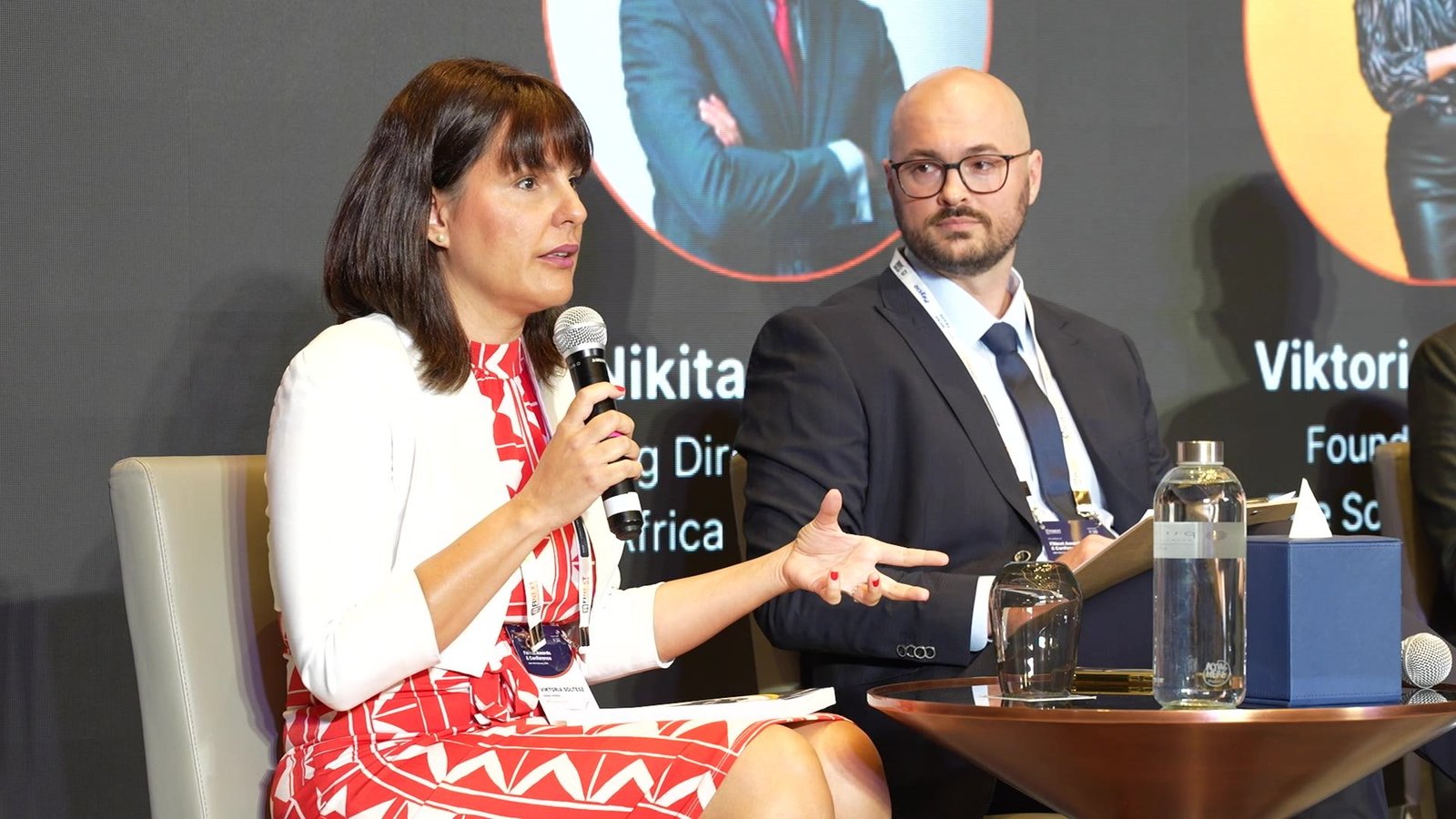
Meet the founders, investors and bankers working on payments, fraud and AI at FinNext 2027. Get your pass for FinNext Dubai on 7 October, London on 13 October or Singapore on 24 November 2027, see what is planned on the agenda, or read our guide to open banking explained.