Becoming a fintech conference speaker is one of the most effective ways to build credibility with investors, partners and future customers, but most stages receive far more proposals than they have slots. This guide sets out nine proven tips for getting selected: how to build a record organisers notice, how to write a proposal that reviewers can say yes to, and how to behave once you have submitted.
The tips draw on the published guidance that conference organisers and programme committees give to applicants, so you can see what they actually ask for. They apply to speaking at conferences of any size, and to founders, investors, bankers, regulators and technology leaders alike, whether you are aiming for a 20-minute talk or a seat on a panel.
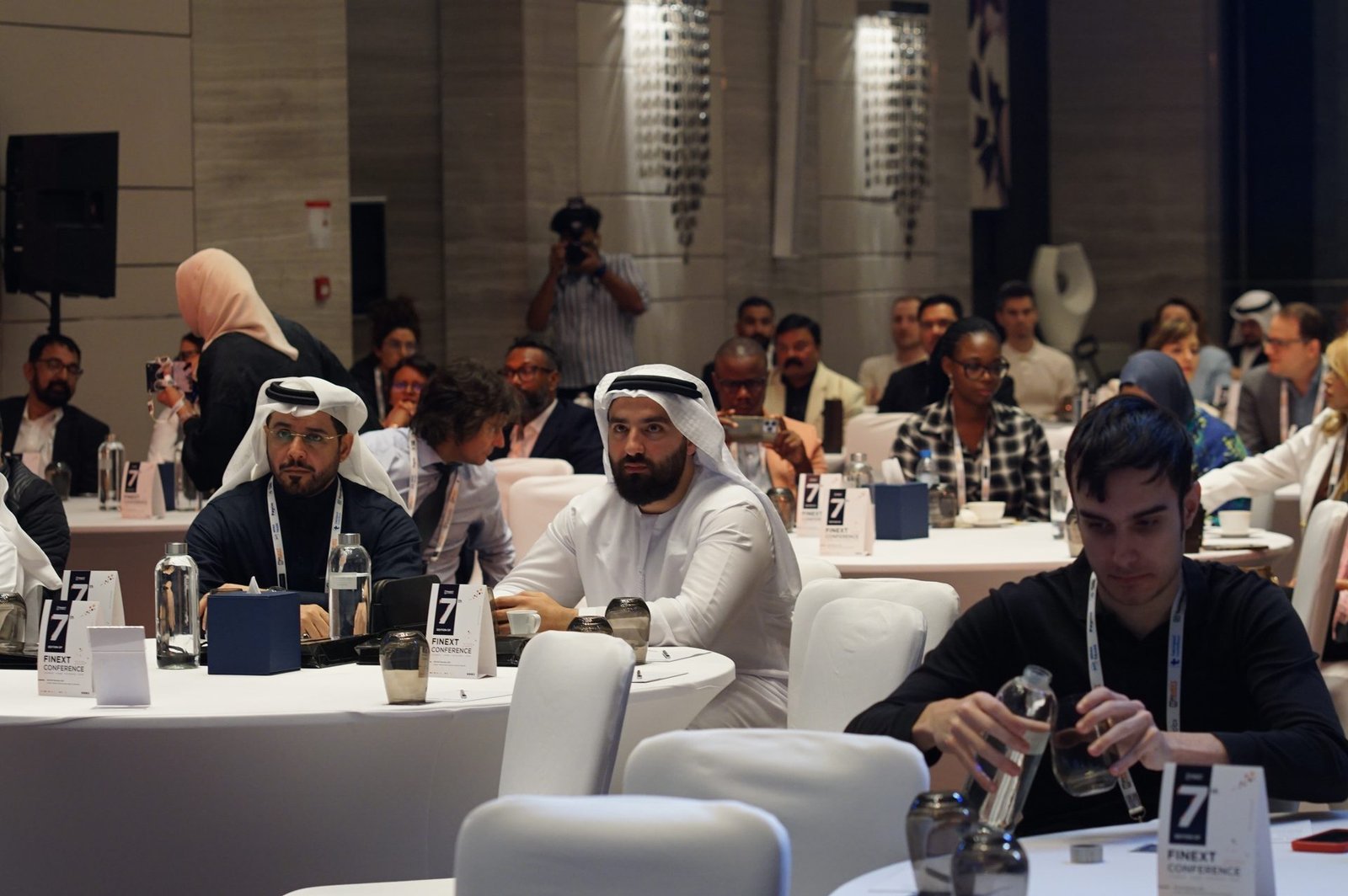
We run FinNext, a one-day fintech summit with editions in Dubai, London and Singapore, and every edition has keynotes and panels. The advice below applies to any fintech event, large or small.
In this article
What organisers look for in a fintech conference speaker
A programme team is building a day that its audience will find useful and that holds together as a whole. Every fintech conference speaker proposal is judged against that goal. The questions behind most decisions are simple: is this topic relevant to our attendees, will they learn something they cannot get elsewhere, and can this person deliver it well?
Published submission guides make these priorities explicit. Nacha’s guide to submitting sessions for Smarter Faster Payments 2027, a US payments conference, asks for proposals that are relevant to attendees, creative and different from previous years, built around complete stories and drawn from real successes. It also states plainly that sales pitches will not be accepted.
In practice, that means organisers are looking for four things:
- Relevance: a topic that fits the event’s themes and its audience’s current problems.
- Originality: a fresh angle, data or experience rather than a talk the audience has already heard.
- Clear value: specific takeaways the audience can use after the session.
- Credibility: evidence that the speaker knows the subject and can hold a room.
Before you apply: 3 tips
1. Build a visible record of expertise
Programme teams often look up a would-be fintech conference speaker before they read the proposal in detail, so make what they find work for you. A 2019 article in FM Magazine on securing a conference speaking slot advised keeping your LinkedIn profile up to date, publishing articles that show depth rather than soundbites, and keeping material from past talks where organisers can find it.
For fintech professionals, useful evidence includes articles on a specific problem you have solved, a short video of you presenting, podcast appearances and contributions to industry working groups. One well-argued piece on, say, reconciling instant payments is worth more than dozens of general posts.
2. Start with smaller events and your own organisation
Few people start speaking at conferences on a flagship main stage. Meetups, webinars, university events, internal town halls and industry association sessions are good places to practise, collect feedback and build a record you can point to. The same FM Magazine article suggested starting with local conferences and working up.
Tell your own organisation that you are willing to speak. Invitations often reach a company rather than a person, and they tend to go to whoever has made their interest known. Ask your communications or marketing team to keep you in mind.
3. Read the call for speakers closely
Each call for speakers, sometimes called a call for papers, sets out themes, formats, deadlines and rules. Read it twice before you write anything. Note the tracks, the session lengths on offer, the audience level and any limits on characters or words.
The rules can be specific. Nacha’s 2027 guide, for example, set a deadline of 31 July 2026, limited panels to three speakers including the moderator, allowed only one speaker per organisation in a session and said proposals listing speakers as “to be determined” would not be considered. Missing a rule like that can end a proposal before anyone reads the idea.
Calls for speakers are published on event websites, LinkedIn and submission platforms. A freeCodeCamp guide to conference talk proposals names Sessionize and PaperCall.io among the platforms used. At FinNext, start with the Speakers page and the agenda to see the kinds of sessions each edition runs.
Writing the proposal: 4 tips
4. Pick one topic and one audience
The strongest proposals make one argument for one clearly defined audience. A talk on “the future of payments” for “everyone in fintech” is hard to select, because a reviewer cannot tell who it is for or what it will add. A talk on what a mid-sized bank learned from moving corporate clients onto request-to-pay is easy to place.
Ask yourself three questions before you start: what value am I bringing, do I know this subject well enough to answer hard questions on it, and does it fit this event’s audience? If any answer is weak, choose a narrower topic.
5. Write a title that states the outcome
Your title is often the only part of your proposal that attendees will read on the published agenda, and reviewers judge it quickly. Microsoft’s guidance on writing a session abstract, published in February 2026, advises that a title should answer “what’s in it for me”, inform rather than entertain, and avoid being simply a product name.
Compare “Unlocking the Power of AI” with “How we cut false fraud alerts on card payments without adding staff”. The second tells the reader the problem, the setting and the result. Clear and simple beats clever, and clickbait tends to count against you.
6. Structure the abstract as problem, approach and takeaways
A good abstract does three jobs. It defines the problem and why it matters now, explains what the session covers and how, and lists what attendees will be able to do afterwards. The freeCodeCamp guide recommends naming the target audience and ending with two or three clear learning outcomes.
Write in plain English and spell out acronyms on first use, because reviewers may come from banking, technology or policy backgrounds. Keep to the character limit, and have a colleague read the abstract before you submit. Microsoft’s guidance also warns against letting an AI tool write the whole abstract, noting that reviewers can often tell.
7. Leave the sales pitch out
Nothing ends a proposal faster than a thinly disguised product demo. Audiences come to learn, and organisers protect that experience, which is why guides like Nacha’s rule out sales pitches altogether. The FM Magazine article also noted that some producers expect vendors who want stage time to sponsor, so be realistic about how a supplier’s proposal will be read.
If you work for a vendor, build your talk around a client’s problem and outcome, ideally with the client presenting alongside you, and mention your product only where it is needed to explain what happened. Lessons, numbers and honest mistakes earn far more attention than features.
Panels and follow-through: 2 tips
8. Propose a balanced, confirmed panel
If you are proposing a panel, the line-up is part of the idea. Bring together people with different vantage points, such as a bank, a fintech, an investor and a regulator or policy voice, and make sure they will genuinely disagree on something. Nacha’s guide notes that sessions work best with diverse participants.
Confirm every speaker before you submit and include their names, roles and short bios. Keep the panel small enough for real discussion, and name a moderator who will prepare questions rather than read out introductions.
9. Be easy to work with after you submit
Organisers remember speakers who make their job easier. When you answer a call for speakers, submit before the deadline, respond quickly to questions and keep your bio and photo ready. The freeCodeCamp guide treats the speaker bio as being as important as the title: who you are, where you work, relevant experience, a recent photo and a profile link.
Microsoft’s guidance lists behaviours to avoid: emailing organisers to say you have submitted, submitting the same talk to every track and demanding feedback straight after a rejection. Waiting a week and then politely asking what would have made the proposal stronger is reasonable, and it often helps next time.
A strong and a weak proposal compared
The difference between proposals that are selected and those that are not is usually visible in a few lines. Here is how the same idea can be presented two ways.
| Element | Weak proposal | Strong proposal |
|---|---|---|
| Title | The Future of Open Finance | What 18 months of open finance APIs taught one lender about credit decisions |
| Audience | Everyone interested in fintech | Credit and product teams at banks and lenders |
| Abstract | A general overview of trends and opportunities | The problem, the approach taken, what worked, what did not and what to do differently |
| Takeaways | Not stated | Three specific outcomes attendees can apply |
| Speakers | Speakers to be confirmed | Named, confirmed speakers from different organisations |
| Tone | Product-led | Evidence-led, with honest lessons |
Common mistakes that get proposals rejected
Most rejections come from a handful of avoidable problems. Check your proposal against this list before you submit:
- Missing the deadline or ignoring the stated format and length.
- A broad, buzzword-heavy title that does not say what the audience will gain.
- No defined audience and no learning outcomes.
- A product pitch presented as a case study.
- Panels with unconfirmed speakers or several people from the same company.
- Submitting a talk already given elsewhere without a new angle.
- Spelling mistakes, unexplained acronyms and an out-of-date bio.
Rejection is normal, even for an experienced fintech conference speaker, because programme teams have to balance topics, formats and voices across a whole day. Treat each proposal as a draft for the next one, and keep a file of abstracts you can adapt.
Facts checked on 25 November 2026.
Fintech conference speaker: frequently asked questions
Do I need to be a well-known expert to speak at a fintech conference?
No. Organisers look for relevant, original and useful content, and a practitioner with a specific, well-evidenced story is often more valuable than a famous name with a general talk. Building a record at smaller events first helps.
How long should a conference session abstract be?
Follow the limit set in the call for speakers, which varies by event. Whatever the length, cover the problem, what the session covers and two or three clear outcomes for a named audience.
Can vendors and technology providers speak at fintech events?
Yes, but proposals that read as sales pitches are usually rejected, and some events rule them out entirely. Build the talk around a client’s problem and results, ideally with the client presenting, and keep product mentions to a minimum.
What should a speaker bio include?
Your name, role and organisation, the experience that makes you credible on this topic, a recent photo and a link to a professional profile. Keep it short and specific to the session you are proposing.
How do I apply to speak at FinNext 2027?
Visit the Speakers page on the FinNext website to apply. FinNext runs one-day editions in Dubai on 7 October 2027, London on 13 October 2027 and Singapore on 24 November 2027, each with keynotes, panels and the FinNext Awards.
Join us at FinNext 2027
Ready to take the stage? Apply to speak at FinNext 2027, get your pass for Dubai, London or Singapore, and read our fintech conference networking tips to make the most of the day.